Hello to the greatest mango fruit wiki! And, whether you have ever taken a bite or two into a juicy, sweet mango and wondered about this marvellous fruit, you have arrived at the proper place. The mango is not a regular fruit, to most people of the world, it can be said that it is the king of fruits. This title is not only about its great taste. It is an acknowledgement of it being rich with history, amazing nutritional content and the sheer happiness it creates among the millions it serves.
This manual will carry you on a tour on all you should know about the mango. We are going to discuss its history, deconstruct its great health benefits and demonstrate how it can be easily integrated into your daily routine. Prepare to learn why this tropical treasure has been adored by the people for more than 4,000 years and how it can be a part of your life and it can be a healthy and delicious one.
What is a Mango? An Introduction to Mangifera Indica
The mango is a tropical stone fruit, or drupe, according to any basic mango fruit wiki, implying the presence of a single large seed in the centre of its fleshy pulp. It is scientifically known as Mangifera indica that refers to its origins in India and the Southeast Asian region where it has been grown for thousands of years. Mangoes are not a single kind; over one hundred varieties of mango are available each has a distinct taste, shape, size and color. Mangoes can have skin that is green, yellow, orange, red, or even a beautiful rainbow of these colours.
The inside is usually a bright golden yellow, and the taste can range from sweet like honey to pleasantly tangy, depending on the type and how ripe it is. This variety also renders the mango a very versatile kitchen ingredient. It is also the national fruit of India and Pakistan therefore emphasizing its strong cultural presence. Alphonso to the common Tommy Atkins all kinds have their special flavour of the tropics.
A Nutritional Powerhouse: The Mango Nutrition Profile
Look at the mango nutrition facts and you can easily understand why this fruit has become a superfood. It is a low-calorie food that contains impressive vitamins and minerals.A cup (165 grammes) of fresh mango has only about 99 calories, but it has an amazing 67 percent of your daily Vitamin C needs. This serving also has a lot of copper (20% DV) and folate (18% DV), which are both very important for the healthy growth and development of the fetus during pregnancy.
Mango is also a great source of Vitamin A (10% DV), which is important for vision and immunity, and Vitamin B6 (15% DV), which helps with energy metabolism and brain function. It also has a lot of potassium, vitamin E, and vitamin K. There are 2.6 grams of fibre in a cup of mango. This helps you feel full longer and keeps your digestive system healthy. Mango is a great choice for anyone who wants to improve their diet without eating a lot of calories because it has a lot of nutrients and not many calories.
Unveiling the Health Benefits of Mango
The positive things about mango far outweigh its tasting good. It has been proven that traditional cultures knew many centuries before the modern science that this fruit is great when it comes to your health. The ability to improve your immune system is among the most remarkable advantages of mango, owing to its extremely high Vitamin C, which assists your body to generate additional disease-fighting white blood cells. Mango is a star to your digestive system, as it has digestive enzymes known as amylases, which aid in breaking down food, and its high fiber and water content can help remedy some digestive problems, such as constipation and bloating.
Your heart is also healthier with the fruit since the potassium and magnesium it provides make sure that blood flows properly and that blood vessels are relaxed to help lower your blood pressure . The antioxidants lutein and zeaxanthin found in mango help keep your eyes healthy and the Vitamin A can help your eyes overall. There are even some studies which hint at the possibility that the antioxidants found in mango could have anticancer effects but need further investigation in humans.

Mango in Your Diet: How to Select, Cut, and Enjoy
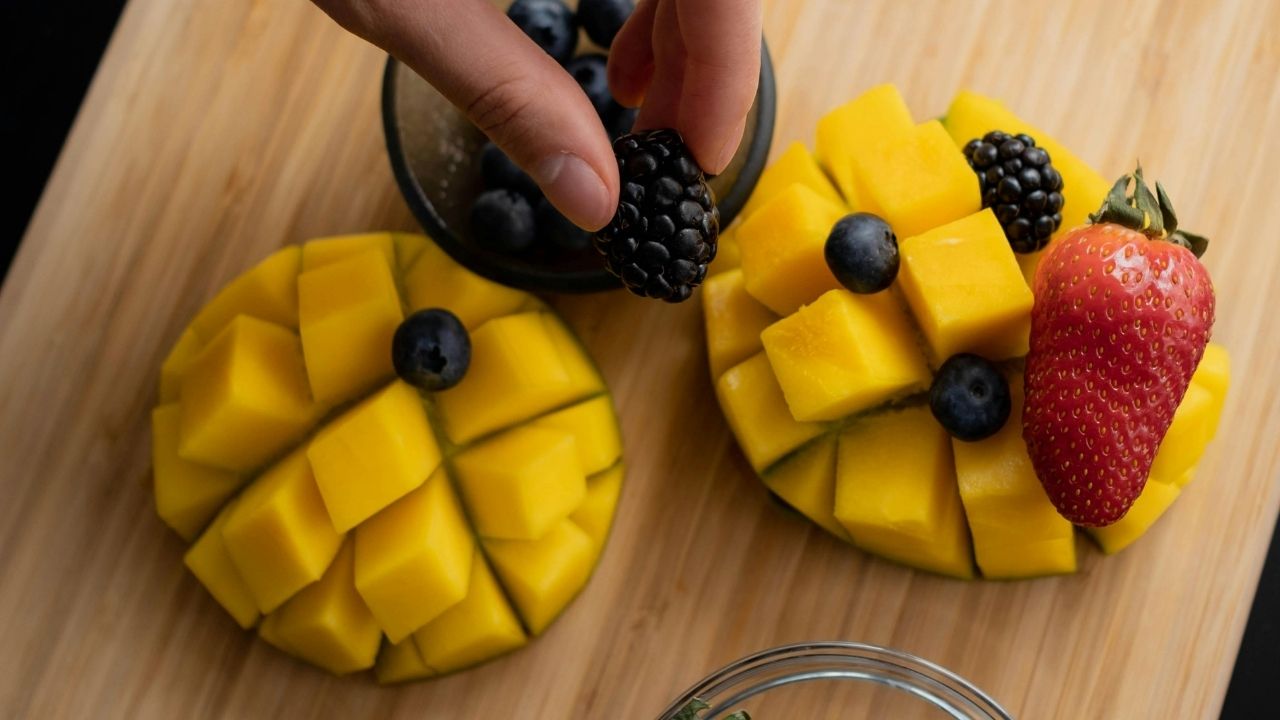
The most important thing in enjoying a mango is knowing how to pick, prepare and eat it. Mangoes are very difficult to cut since they are huge, flat, and pit-like, but they can easily be cut using a simple technique. To begin with, then, how do you select a good one? Do not be prejudiced by the color of a mango. Rather, it should be squeezed gently; a mango which is ripe will yield slightly to a squeeze, like a ripe avocado. It also ought to be sweet-smelling on the stem end. To chop it, hold the mango on one end and chop vertically, about 1/4 inch below the middle–this will keep you out of the pit.
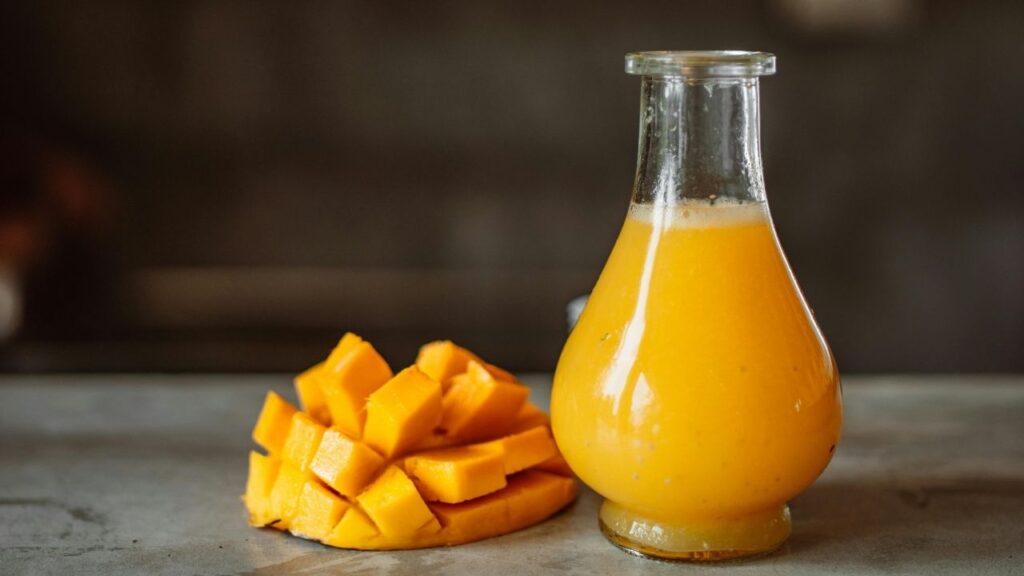
Repeat on the other side. Play then the flesh of each side of the check as in a grid, but without piercing the flesh, and scrape out the cubes with a spoon. And now the enjoyable part, how to enjoy it! These fresh cubes can be added to smoothies, yogurt or oatmeal to have a sweet beginning of the day. They are a traditional accompaniment to fresh salsas, salads and ceviche. To make it warm, you can also grill slices of mangoes to make the mangoes naturally sweet. Although it tastes good, one should consume dried mango sparingly because it has more sugar concentration, and one should always look for no added sugars.

Important Considerations and Potential Allergies
Although mangoes are safe and healthy for most individuals, there are just two things to consider to enjoy them without problems. The greatest warning is an uncommon but true allergy. Mango is related to poison ivy and poison oak (the cashew family) and its skin is filled with the same type of oil (urushiol), which is present in the other poison plants and leads to allergic skin reactions. It is not a problem to most people provided they keep away the skin. Nevertheless, others might be very sensitive and they can easily develop contact dermatitis- itchy and blistering rash, because of touching the peel.
In case your hands are itchy when peeling mangoes, an easy solution is to put on gloves when peeling them. The other factor is sugar content. The sugar in mango is natural but the fruit itself is a comparatively high source of sugar when compared to other fruits such as berries. Although the recent researches indicate that mangoes can also be included in a healthy diet, individuals whose blood sugar levels are affected, including diabetics, should consume it sparingly, maintaining a moderate amount of approximately one cup of mango at a time. Just like with any food, it is about balance.
Mango Versus Other Superfruits: A Comparative Look
Comparing the mango to other well-known “superfruits” can help you understand how it fits in with other fruits. The table below makes it easy to see the differences between the two based on important functional and nutritional factors.
| Feature | Mango | Blueberries | Apples (with skin) | Pomegranate |
| Key Strength | Excellent source of Vitamins C & A, digestive enzymes | Very high in anthocyanins (powerful antioxidants) | High in soluble fiber (pectin) and flavonoids | Unique ellagitannins that may help manage blood sugar spikes |
| Vitamin C | Very High (67% DV per cup) | High | Moderate | Varies |
| Dietary Fiber | 2.6 g per cup | High for their size | High, especially in the skin | Present in seeds, less in juice |
| Unique Compound | Mangiferin (a potent antioxidant) | Anthocyanins | Quercetin (a flavonoid) | Ellagitannins |
| Best Enjoyed | Fresh, in salsas, grilled, in smoothies | Fresh, frozen, in oatmeal, with yogurt | Fresh and whole, in salads, with nut butter | Seeds (arils) sprinkled on salads, yogurt |
| Sugar Content | Higher in natural sugars | Lower in natural sugars | Moderate | Juice can be high in sugar; seeds are better |

Conclusion: Embracing the King of Fruits
To sum it up, the mango is a really royal fruit as we have discovered in this elaborated mango fruit wiki. It is not a mere sweet and tasty treat. It is a nutritional powerhouse, with immune-enhancing vitamin C, digestive enzymes and fiber, and a plethora of antioxidants. That help with everything from heart health to vision. It is virtually indispensable in the kitchen, and can be used in both sweet and savory food, breakfast to dinner. Mango is a great healthy food that can become a delicious and nutritious component of your diet. Without fear of its natural sugar content and the rare possibility of a skin-related allergy. The next time you encounter this colorful fruit at the market buy it and savor all the health benefits it has as well as. The tasty taste that the king of fruits provides.
FAQ’s
1. Is mango good for weight loss?
Yes mango can be utilized as a good component in a weight management program. It contains less calories, but a lot of water and fiber, which make you feel more full and satisfied longer. Making you less prone to snacking on something less healthy.
2. How can I tell if a mango is ripe?
Don’t rely on color alone. Squeeze the mango; a ripe one will give in slightly to the pressure like a ripe peach or avocado. It ought to smell sweet and fruity on the stem end.
3. Can people with diabetes eat mango?
Yes, in moderation. Although mango is more natural sugar than other fruits, it is also associated with fiber and other good compounds. People with diabetes should take a small amount (1/2 to 1 cup) and mix it with a source of protein or fat to help control how their blood sugar reacts.
4. Why do some people get a rash from mangoes?
Mango skin has urushiol in it, which is the same oil that poison ivy has. Some people are allergic to it and may get contact dermatitis after touching the peel. To avoid this, wear gloves while peeling or have someone else do it for you.
5. What is the best way to cut a mango?
The easiest way is to cut straight down both sides of the flat pit. After that, use a knife to cut a grid pattern into the flesh of each half without cutting through the skin. Then, use a spoon to scoop out the cubes. The “hedgehog” method is what this is called.